The product quality can depend on the metal surface; that’s why this process of manufacturing holds the whole value. Different methods are used to make the ideal metal surface.
Shot blasting is a technique used to turn metal into something more ready for painting, welding, or even protective coatings. It does this job by scraping away rust, which can interfere with the entire process and prevent proper adhesion overall.
Picking the right gear, abrasive media, and operating parameters really can help you move faster and also lower those longer-term upkeep costs.
This section covers machine types, abrasive choices, how to use them, their applications, the real benefits, and a set of best practices to ensure dependable surface prep results each time.
What is shot blasting
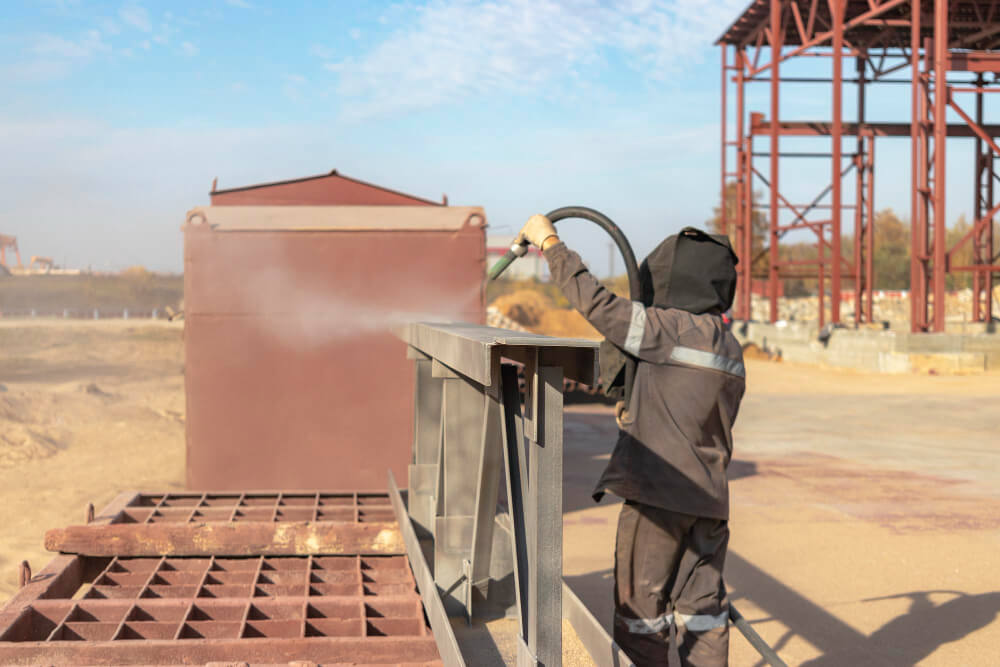
The process is basically the way you force small, tough abrasive bits at a workpiece, using either centrifugal force or compressed air.
When those particles hit, they tear away rust, mill scale, sand, and any old coatings while also roughening the surface so the new adhesion has something to “bite” on. Many foundries, fabricators, and shipyards use it, mostly because it is fast, repeatable, and more mechanised than anything truly manual.
How Shot Blasting Works
A blast wheel or nozzle accelerates abrasive media to velocities between 60 and 110 metres per second. The media hits the surface, breaks up contaminants, and then kind of bounces back into a recovery hopper.
From there, a screw conveyor plus a bucket elevator raises the used medium up to a separator, which sorts the reusable shot from dust and debris kind of like it’s doing cleanup in one pass.
Main Components of a Shot Blasting Machine
Every wheel blast machine, regardless of manufacturer, shares six functional elements.
Blast Wheel Assembly
The wheel houses an impeller and control cage that direct abrasives onto the workpiece in a specific pattern and angle; this geometry dictates coverage and wear rate.
Abrasive Recovery System
Screw conveyors, elevators, and air-wash separators reclaim usable shot and discard broken particles and contaminants.
Dust Collection Unit
Cartridge filters or bag houses pull airborne fines out of the cabinet, protecting both the equipment and the operator’s lungs.
Workpiece Handling System
Turntables, hangers, tumble belts, or roller conveyors move parts through the blast zone at a controlled speed.
Types of Shot Blasting Machines
The right machine depends on part geometry, like batch size, plus, honestly, how much handling you’re prepared to automate.
Every configuration is built for different situations and needs, so here’s what each one is geared toward and why it’s set up that way.
Tumblast Machines
These tumble small castings and forgings on a rubber belt, giving even, all-sided coverage without an operator repositioning the part mid-cycle.
Hanger and Hook Machines
Larger, irregular parts, chassis, brackets, and weldments hang from rotating hooks that pass through the blast stream, exposing awkward geometries the belt can’t handle.
Table and Turntable Machines
Flat or asymmetric parts sit on a rotating table, loaded manually or by robot, suited to lower-volume or mixed-part production runs.
Roller Conveyor Machines
Long, flat stock; beams; plate; and pipe pass straight through on rollers, designed for continuous, high-throughput lines rather than for batch work.
Portable Air Blast Rigs
These portable air blast rigs, powered by a compressor and nozzle instead of a wheel, handle site work, spot repairs, and delicate geometries that a fixed cabinet simply can’t reach.
Types of Blasting Media
Media choice shapes everything downstream, from cutting speed and surface finish to how many cycles you get before replenishing stock. Five types cover almost every industrial application.
Cast Steel Shot
Round, ball-shaped particles are suited for cleaning and peening when you want surface refinement without aggressive material removal.
Steel Grit
Produced by crushing shot into angular fragments, grit cuts faster and leaves a coarser anchor profile suited to heavy coatings.
Stainless Steel Shot
Resists rust contamination when working on stainless or aluminium substrates, where carbon steel media would leave iron deposits behind.
Cut Wire Shot
Offers tighter hardness control and near-zero porosity, which is why aerospace peening specifications favour it over cast shot.
Mineral and Ceramic Media
Aluminium oxide, glass beads, and garnet are used for non-ferrous or blast-sensitive applications where steel would embed or discolour the surface.
Steel Shot vs Steel Grit
Shape is the entire story here, and it dictates everything else that follows.
| Factor | Steel Shot | Steel Grit |
| Particle shape | Spherical | Angular, crushed |
| Cutting action | Smoother, less aggressive | Fast, aggressive bite |
| Surface profile | Peened, rounded | Coarser, sharper anchor pattern |
| Wear rate | Slower lasts longer | Faster edges fracture under impact |
| Best suited to | Peening, light cleaning | Heavy descaling, thick coating prep |
Choose the shot for peening and light cleaning, and the grit for heavy descaling, before applying thick protective coatings. Many shops blend both in a single cycle to grit first and strip or shot second to refine.
Shot Blasting Process Explained
Operators load the workpiece and pick an abrasive grade that matches the contaminant and the target profile. Then they run a timed or automated blast cycle, kind of like setting it and letting it happen.
Wheel speed, abrasive flow rate, and exposure time are what really dial up the aggressiveness. Higher wheel RPM plus longer dwell gives you deeper anchor profiles; it ends up more persistent.
The recovery system continuously separates spent abrasive from debris throughout the cycle. Once the cycle finishes, an inspector checks surface cleanliness against a visual standard and measures the profile with a comparator or replica tape. Parts that fail the standard go back through for another pass.
Applications of Shot Blasting
Applications describe what the process achieves, independent of who’s running it. Descaling strips mill scale and oxide layers from plate and structural sections before priming.
Casting cleaning removes sand and residual oxide directly off foundry parts. Peening induces compressive residual stress in springs, gears, and crankshafts to extend fatigue life.
Profiling roughens concrete floors and steel plates to a specified anchor pattern ahead of epoxy or protective coatings. Descaling, cleaning, peening, and profiling are four distinct technical jobs, all performed on one machine.
Benefits of Shot Blasting
It recycles its abrasives hundreds of times, cutting material costs against expendable media like sand. It runs faster than manual wire-brushing or grinding, shortening cycle times on high-volume lines. The enclosed cabinet contains dust far better than open-air blasting, reducing exposure risk.
Peening cycles measurably extend component fatigue life, a documented, testable benefit, not a marketing claim. The process delivers a consistent, repeatable surface profile every cycle once you fix your parameters, which manual methods simply can’t match run after run.
Shot Blasting vs Sand Blasting
This comparison is about system and safety, not media mechanics.
| Factor | Shot Blasting | Sand Blasting |
| Media type | Metallic (steel shot/grit) | Mineral (sand or substitutes) |
| System | Mechanised, largely enclosed | Often open, air-driven |
| Media reuse | Hundreds of cycles | One to two passes, then discarded |
| Health risk | Lower contained dust | Higher silica inhalation risk |
| Best suited to | Industrial-scale production | Site work, small jobs, delicate substrates |
Sand tends to wear down after a single or a pair of passes; you can’t really recover it and reuse it the same way that you would with steel shot.
A bunch of regulatory bodies across most jurisdictions limit silica sand because breathing in those tiny particles leads to silicosis.
For industrial production at scale, where you need repeatable results, shot blasting keeps beating other options on costs, safety, and throughput pretty consistently.
Shot Blasting vs Grit Blasting
This one clears up terminology confusion that costs people money on a spec sheet.
| Factor | Shot Blasting (term) | Grit Blasting (term) |
| What it describes | The mechanised, wheel-driven process | Use of angular grit media specifically |
| Equipment | Wheel machine (usually) | Wheel machine or air system |
| Resulting profile | Smoother, tighter | Rougher, more anchored |
| Ra outcome | Lower roughness value | Higher roughness value |
People often use these terms interchangeably, but they’re not identical. The former is a process, and “grit blasting” is a media choice within that process.
The distinction matters when you’re specifying a surface preparation standard for a contractor, because “shot blasted” and “grit blasted” can imply different Ra values on paper.
Industries That Need Shot Blasting
Where applications covered what the process does, this section covers why each sector can’t skip it. Shipbuilding needs it because untreated hull corrosion shortens vessel life and fails class surveys. Automotive and heavy equipment manufacturers need it because unpeened fatigue-critical parts fail warranty testing.
Oil and gas need it because corrosion under coatings on pipes and vessels leads to containment failure, not just cosmetic damage. Construction and infrastructure need it because poorly profiled rebar and structural steel lose coating adhesion within a few seasons. Aerospace needs certified peening because uncertified components don’t clear airworthiness sign-off at all.
Surface Preparation Standards
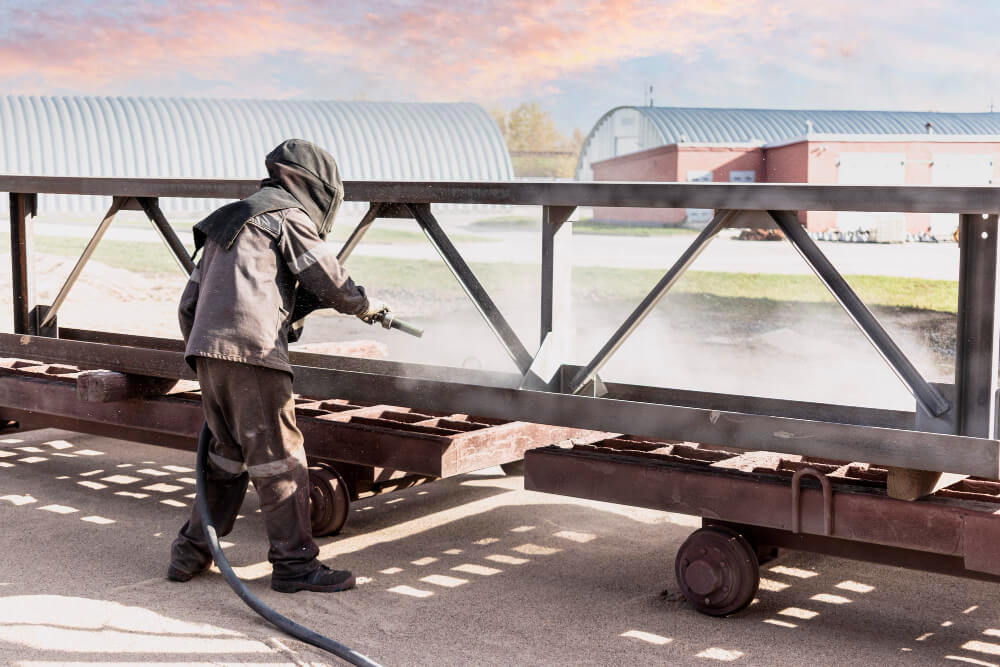
ISO 8501-1 defines visual cleanliness grades Sa 1 through Sa 3 that specify how much scale, rust, and contamination remain after blasting. SSPC-SP standards run a parallel classification widely used in North America, with SSPC-SP10 near-white metal roughly matching ISO SA 2.5. NACE standards govern blast specifications for oil and gas assets specifically. Surface roughness gets measured separately in microns or mils using a profile comparator or replica tape, because cleanliness grade and profile depth are two different specifications a coating manufacturer will demand you hit simultaneously.
Factors Affecting Shot Blasting Quality
Abrasive hardness, shape, and size distribution all directly shape your outcome. Worn-out, undersized media produce an inconsistent profile regardless of machine settings. Wheel speed and abrasive flow rate control impact energy; if they are too low, contaminants survive the pass.
Workpiece speed through the cabinet determines dwell time and, therefore, coverage uniformity. Media contamination with broken particles, dust, and oil residue degrades cleaning performance and clogs the recovery system. Machine maintenance matters just as much as abrasive quality. A worn control cage or blade throws media inconsistently, no matter how effective your shot is.
Common Shot Blasting Problems
Uneven coverage usually traces back to a misaligned control cage or worn blade geometry on the blast wheel. Excessive media consumption indicates an abrasive breakdown caused by oversized or overly aggressive shots for the application.
Embedded abrasive on soft substrates occurs when steel media runs on aluminium or non-ferrous parts that require a gentler mineral abrasive instead. Dust build-up in the cabinet signals a failing or undersized dust collector. Flash rusting after blasting, particularly in humid environments, means too long a gap opened up between the blast cycle and coating application.
How to Choose the Right Blasting Media
Match media hardness to the substrate. Hard steel shot on soft aluminium causes embedding and warping. Match media shape to the goal. Round shot for peening and smoothing, angular grit for aggressive descaling. Match particle size to the coating specification’s required anchor profile.
Coarser media for thick industrial coatings and finer for cosmetic or precision finishes. Factor in recyclability and cost per cycle, not just unit price; a slightly pricier, harder-wearing shot often costs less over thousands of cycles. Always test a candidate media against real parts before committing to a full production run.
Safety Measures During Shot Blasting
Operators need OSHA-compliant eye, face, and hearing protection, as blast noise and ricochet risk are real, not theoretical. Enclosed cabinets and blast rooms prevent stray media from reaching bystanders and property. Dust extraction systems protect against silicosis and metal-fume exposure, especially with mineral or contaminated media.
Regular inspection of wheel housings, hoses, and seals prevents catastrophic failure under pressure. Training matters as much as equipment. An untrained operator running a properly guarded machine is still a liability, and every site needs a documented emergency-stop procedure everyone actually knows.
Maintenance Tips for Shot Blasting Machines
Inspect blast wheel blades and control cages on a fixed schedule, not just when output visibly degrades. Screen reclaimed abrasive regularly to strip out broken particles and dust before they recirculate and damage the wheel.
Check dust collector filters for clogging, or a struggling collector silently drops the cabinet’s air quality long before output problems show up. Lubricate conveyor bearings and elevator chains per the manufacturer’s interval, not on an ad hoc basis. Log wheel and liner wear rates over time; predictable replacement beats emergency downtime every single time.
How to Select the Right Steel Shot Size
Match the shot diameter to the contamination level and the required cleaning speed. Larger shots (S330–S780) strip heavy scale and thick coatings fast at the cost of a rougher finish. Smaller shot (S70–S230) delivers finer, smoother surfaces suited to precision components and cosmetic finishing.
Sieve analysis against ASTM sizing standards confirms a media batch meets spec before it’s loaded. Peening applications typically demand a tighter size distribution than general cleaning, because inconsistent shot size produces inconsistent compressive stress across the part. Always cross-check the size selection against the target Almen intensity if peening is the goal.
Why High-Quality Steel Shot Matters
Low-grade shot fractures early, contaminating the recovery system and spiking consumption rates. A high-quality shot has a controlled Rockwell hardness, typically 40 to 51 HRC. A uniform martensitic structure that survives hundreds of cycles without excessive breakdown. That durability translates directly into a lower cost per part blasted, even if the upfront price per kilogram appears higher.
Consistent hardness and roundness also produce a repeatable surface profile batch after batch, which matters enormously when a client’s coating specification demands tight tolerances. A cheap shot costs more in downtime, rework, and inconsistent results than it ever saves on the invoice, which is precisely the problem a properly tested, properly graded supplier is meant to solve.
Why Choose ITAICHU Steel Shot
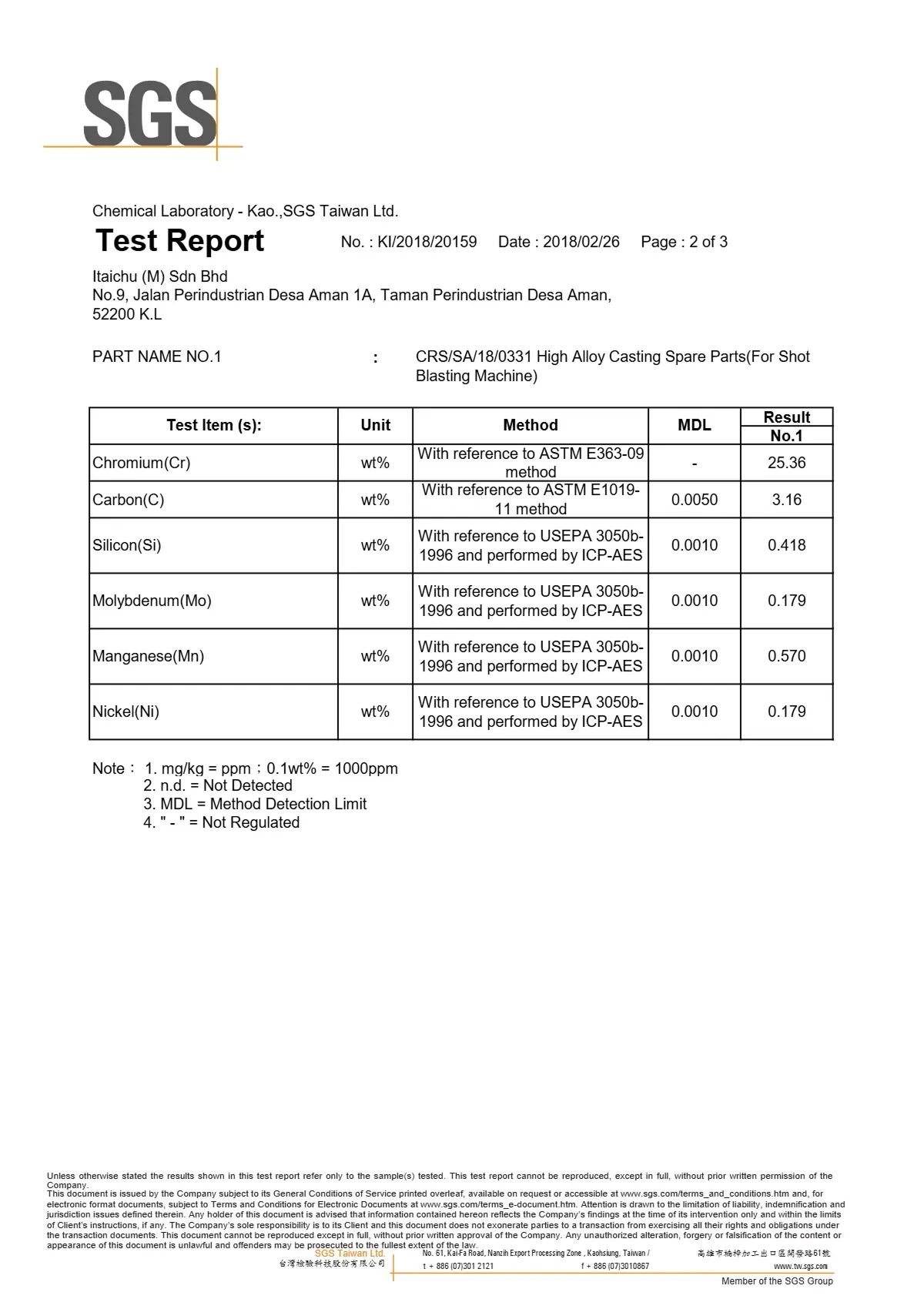
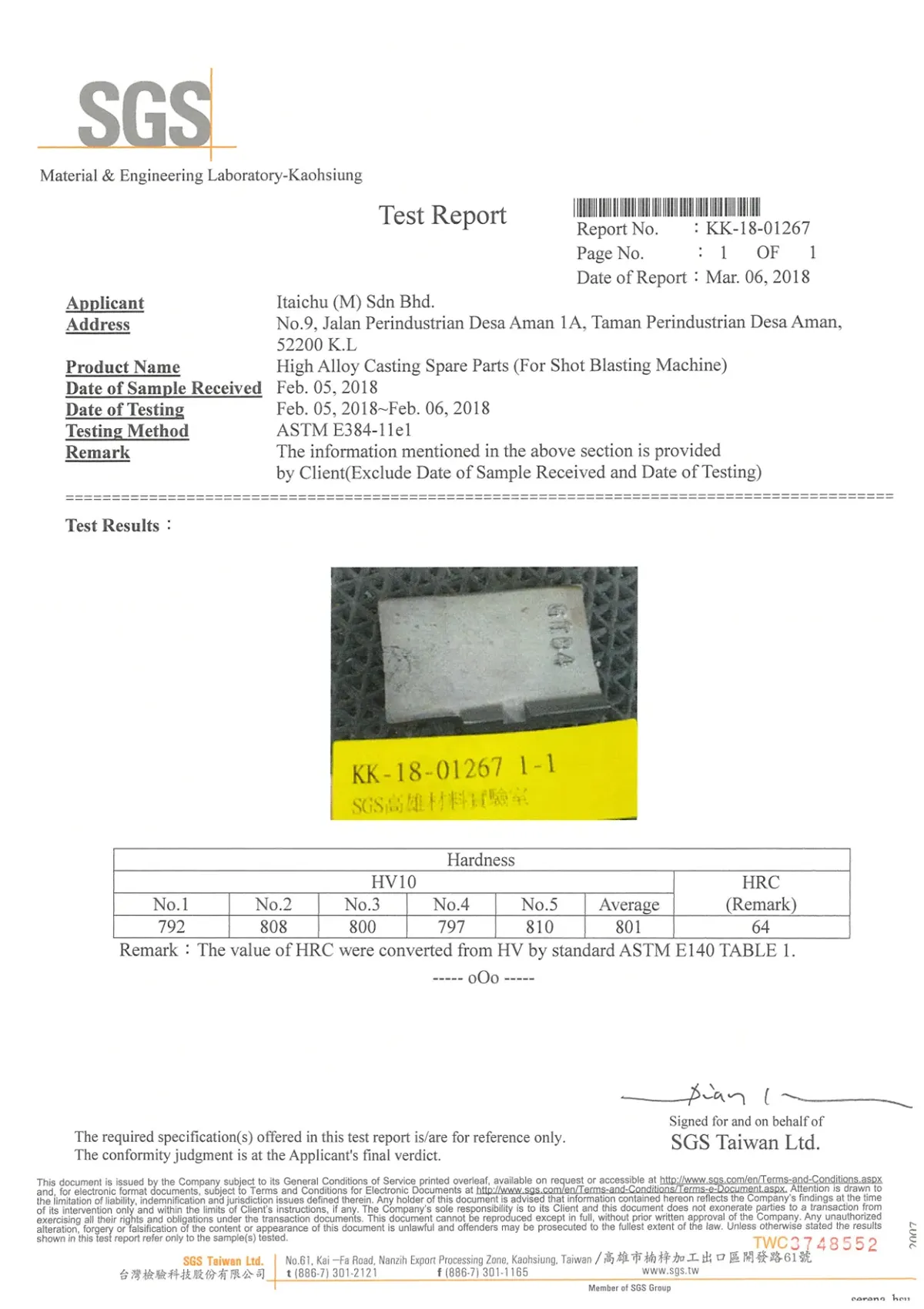
That’s the theory. In practice, quality only means something if it’s verified before the shot reaches your cabinet. ITAICHU brings three decades of blasting equipment and abrasive supply experience to the Malaysian market, backed by a direct partnership with Tochu’s machine range. Every batch of steel shot undergoes hardness and material testing before it ships, giving documented, verifiable quality rather than a supplier’s word.
The product range spans hard and soft grades across the full S70–S780 sieve spectrum, so buyers are specifying media to the job, not compromising on whatever happens to be in stock.
Conclusion
Achieving long-lasting coating performance and reliable component quality starts with selecting the right surface preparation method and maintaining consistent process control. Shot blasting remains one of the most effective solutions for removing contaminants, creating the required surface profile, and improving the durability of finished products across diverse industries.
Whether you’re doing cleaning, descaling, or peening, really putting money into the right blasting process plus solid quality materials tends to guarantee dependable performance and also faster productivity, along with more impressive outcomes for every project.
FAQs
Replace the shot once particle breakdown, roundness loss, or contamination exceeds 20% of the batch. Sieve testing every few thousand cycles confirms when replenishment is actually due.
Yes, but only with softer media like glass beads or stainless shot; hard carbon steel shot embeds in aluminium and causes surface warping on thinner sections.
Blasting cleans and roughens a surface for coating adhesion; peening deliberately deforms it to induce compressive stress, extending fatigue life in load-bearing components.
Inspectors compare the surface against ISO 8501-1 or SSPC-SP visual standards, then measure profile depth with a comparator or replica tape before sign-off.